- DIRECT CONTACTS:
- +256 766 009 702
- +256 772 166 444
- info@menlyntours.com

Ugandan Food Every Traveler Should Try
Ugandan Food Every Traveler Should Try
Food is one of the easiest ways to learn about a country. In Uganda, meals are connected to agriculture, family life, local traditions and the different regions of the country.
During a Uganda trip, trying local food can make your experience more interesting because you are not only seeing the country but also experiencing some of its everyday life.
Matoke
Matoke is one of the foods many travelers associate with Uganda. It is made from cooking green bananas and is commonly served as part of a meal.
It can be prepared in different ways and served with sauces such as groundnut sauce, beans, meat or other accompaniments.
If you have never tried matoke before, a local restaurant or lodge can be a good place to start.
Rolex
A Rolex is a popular Ugandan street food made by combining an omelette with chapati and other ingredients.
It is usually prepared fresh and can make a simple and affordable meal or snack.
The name can be confusing for first-time visitors because it has nothing to do with the watch brand. It is simply a well-known Ugandan food.
Trying a freshly prepared Rolex can be a fun part of exploring Kampala or other towns.
Posho
Posho, also known as ugali in some parts of East Africa, is made from maize flour cooked with water.
It is often served with beans, meat, vegetables or other sauces.
The texture is firm and it is commonly eaten as part of a main meal.
Luwombo
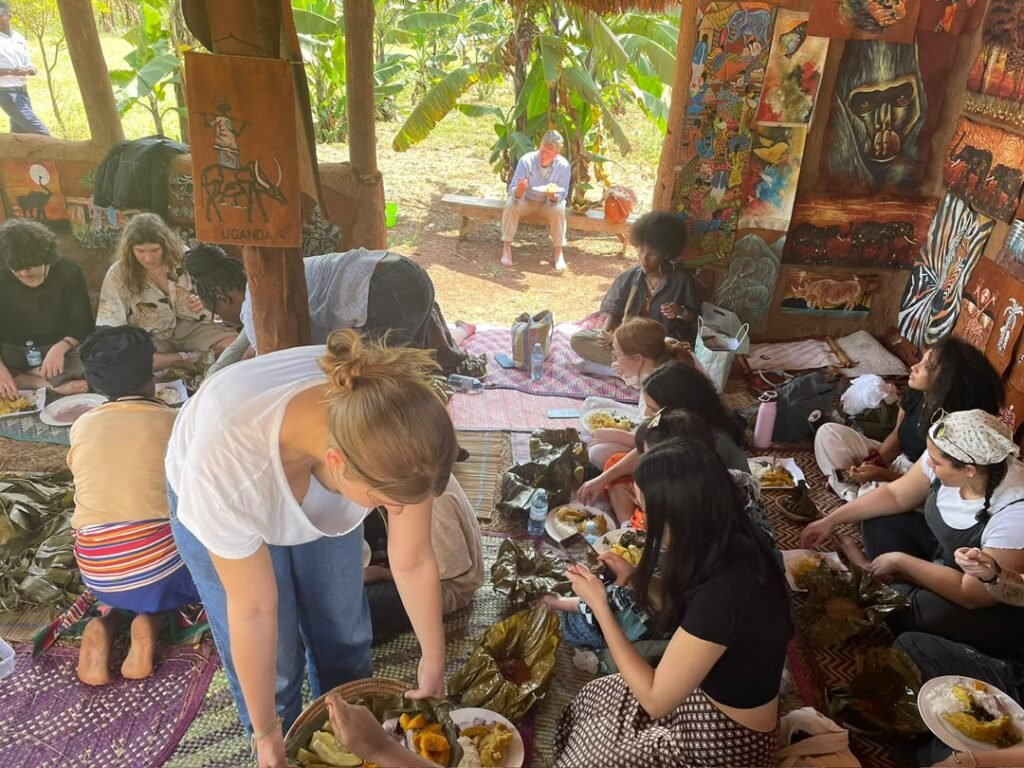
Luwombo is a traditional Ugandan dish in which meat, chicken, fish or other ingredients are cooked in banana leaves.
The banana leaves help give the food its distinctive flavour and aroma.
It is a dish worth trying if you want to experience traditional Ugandan cooking.
Groundnut Sauce
Groundnuts are widely used in Ugandan cooking, and groundnut sauce is an important accompaniment to several local dishes.
The sauce is often served with foods such as matoke, sweet potatoes, cassava or other staples.
Its rich texture and nutty flavour make it different from many sauces visitors may be familiar with.
Chapati
Chapati is widely eaten in Uganda and can be found in restaurants, roadside food stalls and markets.
It is a flatbread that can be eaten with tea, eggs, beans, meat or vegetables.
For travelers, chapati is an easy introduction to everyday Ugandan food.
Cassava and Sweet Potatoes
Cassava and sweet potatoes are important traditional foods in Uganda.
They can be boiled, steamed, fried or prepared in other ways depending on the household and region.
You may encounter them at local restaurants, markets or community visits.
Fresh Tropical Fruits
Uganda’s climate supports many fruits, including bananas, pineapples, passion fruit, mangoes and watermelon.
Fresh fruit can be especially enjoyable during a safari because it provides a simple snack between activities.
You can also find fresh fruit in local markets and restaurants.
Food on a Uganda Safari
Many safari lodges serve both international and local dishes, so travelers can choose how adventurous they want to be.
If you want to try more traditional food, tell your lodge or tour operator before the trip. This can make it easier to include local dishes in your meals.
A cultural experience can also include learning about how certain foods are grown or prepared.
Try Food With an Open Mind
Food preferences are personal, so you do not have to try everything.
Start with dishes that look familiar and gradually try something new. Ask your guide or local host about the ingredients if you are unsure.
Trying local food respectfully can become one of the most enjoyable memories from your trip.
Experience Uganda Through Food
Ugandan food offers travelers another way to understand the country. From matoke and luwombo to Rolex, chapati, groundnut sauce and fresh fruit, there are many flavours to discover.
If you want to combine food with cultural experiences, wildlife or a Uganda safari, Menlyn Tours & Travel can help you plan an itinerary that matches your interests.